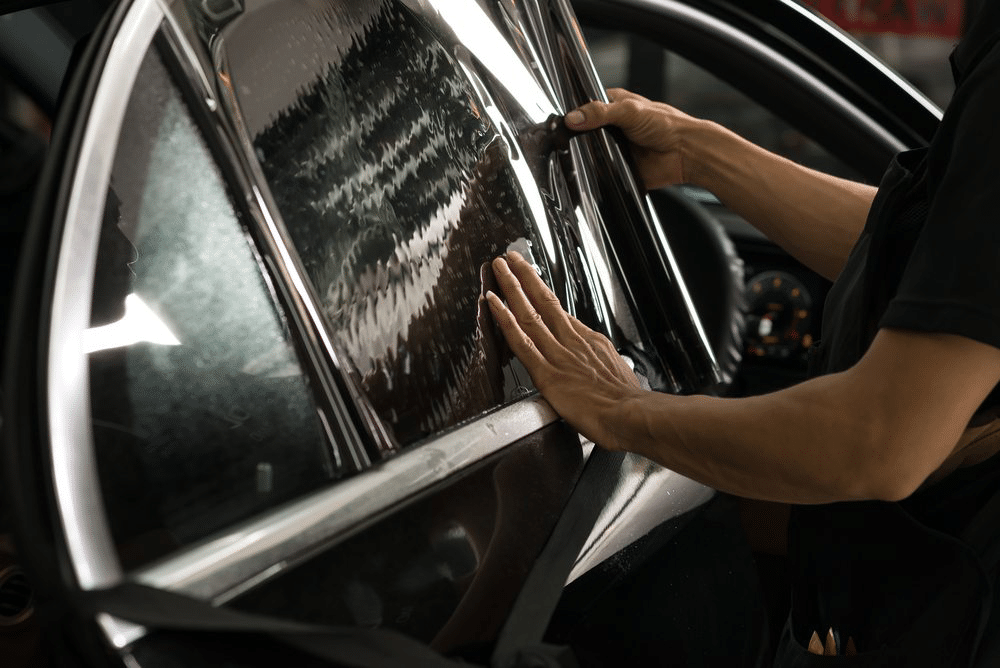
It’s one of the first questions we get asked in the workshop: “How dark can I actually go?” And it’s a fair one. Everyone wants their car looking sharp with a bit of privacy and a lot less heat, but nobody wants a defect notice and a fine for the trouble. The good news is the rules in NSW aren’t complicated once someone explains them properly. So let’s do that.
Here’s a plain-English rundown of what’s legal, what’s not, and how to make sure your tint keeps you on the right side of the law.
First, What Is VLT?
Every tinting law comes back to one number: VLT, or Visible Light Transmission. It’s the percentage of light that passes through your window once the film and the glass are combined. The higher the number, the lighter the tint. A 35% VLT means 35% of light gets through and 65% is blocked. A 20% VLT is darker again.
Here’s the part most people get wrong: the legal limit isn’t about the film you buy — it’s about the final result once that film goes over your glass. Most factory glass already blocks a bit of light on its own, so a 35% film over factory glass can end up darker than 35% once it’s on. That’s exactly why the number on the box means very little, and why measuring the finished result matters.
The Legal Limits in NSW
For a standard passenger car in NSW, the rules break down like this:
- Windscreen: No tint film on the main glass. You’re allowed a tinted band across the top only — the upper 10% of the windscreen, or the area above the wiper sweep, whichever is larger.
- Front side windows: Must let through at least 35% VLT. This is the big one people try to push, and it’s the one most likely to get pulled up.
- Rear side windows and rear windscreen: Can go darker — down to 20% VLT — as long as your car has working side mirrors on both sides.
That last point catches people out. The darker 20% allowance on the rear only applies if you’ve got a mirror on each side of the car. If you’re relying on a single mirror, everything behind the driver has to meet the same 35% limit as the front.
What’s Not Allowed at All
A few things are off the table no matter what percentage you’re running:
- Reflective or mirror-finish film. NSW doesn’t permit any tint that reflects more than a small amount of light, so that chrome, mirrored look isn’t legal here.
- Coloured films. Reds, blues, ambers and the like are out — tint needs to stay a neutral tone.
- Bubbled, damaged or peeling film that gets in the way of the driver’s vision. Even if it was legal when it went on, deteriorated film can still land you a defect.
What Happens If You Get It Wrong?
It’s not just a slap on the wrist. NSW Police and Transport for NSW inspectors carry handheld VLT meters, and they do use them — especially around registration time and roadside checks. If your tint comes back too dark, you’re looking at a fine, demerit points, and a defect notice that forces you to strip the film off and get the car re-inspected before it’s roadworthy again.
On top of that, illegal tint can cause headaches with your registration and even your insurance if you’re ever in an incident. It’s simply not worth shaving a few percent for.
A Note on Medical Exemptions
NSW does allow medical exemptions for people with genuine light-sensitivity conditions, which permit darker tint than the standard limits. These need proper documentation and approval — they’re not something you can just claim on the spot. If you think you might qualify, it’s worth looking into the official process before booking anything in.
How We Keep You Legal
This is where going to a professional actually saves you money in the long run. At Highway Image, we measure the film darkness with a VLT meter before and after it goes on, so we know exactly where your car sits against the law — not just what the film manufacturer claims. We only use premium, non-reflective film that meets NSW standards, and we’re happy to talk you through what percentage suits your car, your privacy, and the legal limits all at once.
And here’s the thing worth remembering: darker doesn’t automatically mean cooler. A quality ceramic film at the legal 35% will block more heat than a cheap dark film at 20%. You don’t have to break the rules to get a comfortable, cool car — you just need the right film. That’s a conversation we’re always happy to have.
The Bottom Line
Tinting your car in NSW is straightforward when it’s done properly: 35% on the fronts, 20% on the rear if you’ve got dual mirrors, no film on the windscreen bar the top band, and nothing reflective or coloured. Get those right and you’ll enjoy the look, the privacy, and the heat relief without ever worrying about a knock on the window.
Thinking about getting your car done? Give us a call on 02 6971 9292 or email info@highwayimage.com.au for a free, no-obligation quote — we’ll make sure it looks great and stays legal.
(Please note: tinting laws can change and this is a general guide only — always confirm the current Transport for NSW requirements before installation.)